Photographing places you cannot control is one of the most common challenges in real-world photography. When you are shooting architecture, courthouses, or public spaces, you rarely get ideal conditions. Light may be harsh, weather may be uncooperative, and the scene may be filled with parked cars, construction equipment, or people moving through the frame. Unlike studio work, you cannot pause the environment or rearrange the scene.
This post is not about camera settings or technical perfection. It is about decision-making. You will learn how to evaluate a scene quickly, decide when it is worth shooting anyway, and understand why waiting for perfect conditions often costs you usable images. These skills are especially important for architectural and courthouse photography, where access and timing are limited and return visits are not always realistic.
These challenges are especially common in architectural photography, where real-world conditions are rarely ideal.
If you want more architectural photography ideas that still work in real-world conditions, this B&H video is a solid reference.
What Uncontrollable Environments Really Mean
An uncontrollable environment is any location where you are a visitor rather than the owner of the space. Courthouses, city buildings, historic sites, and downtown streets all fall into this category. These locations exist to serve the public, not photographers.
In these environments, you cannot move vehicles, block pedestrian traffic, stop maintenance work, or adjust landscaping. You also cannot control the sun’s position or the weather. Accepting this reality is the first step toward becoming more consistent and productive in the field.
Photographers who struggle in these situations often hesitate. They wait for clouds to clear, for cars to move, or for construction to finish. In many cases, that waiting leads to leaving without shooting anything at all. The more effective approach is learning how to recognize when a scene still has value despite its flaws.
Bad Light, Bad Weather, and Visual Obstacles
[INSERT BODY IMAGE 1 HERE – 1200×675]
Alt text: Courthouse photographed in harsh daylight with parked cars and visual obstructions.
Bad light is one of the most frequent complaints in architectural photography. Midday sun can create harsh shadows, blown highlights, and uneven contrast across a building’s facade. While golden hour is ideal, it is not always possible, especially when traveling or shooting on tight schedules.
Rather than abandoning the shot, look for angles that minimize the worst effects of the light. Side lighting can emphasize texture and depth. Shooting slightly wider can help balance shadow-heavy areas. In some cases, harsh light still produces strong, high-contrast images that work well for documentation or stock use.
Weather is another factor that photographers often underestimate. Overcast skies may feel boring, but they provide soft, even light that preserves detail across the entire structure. Rain, fog, or snow can add mood and seasonal context that makes an image more useful to buyers looking for specific conditions.
Visual obstacles like parked cars, cones, signs, and scaffolding are unavoidable in public spaces. The key question is whether these elements overwhelm the subject or simply exist around it. If the building remains clear and identifiable, the image often still has value.
Why Waiting for Perfection Costs You Shots
Waiting for perfect conditions sounds reasonable, but it is rarely practical. Many locations are far from home, visited once, or accessed only briefly. Construction projects can last months or years. Parking patterns may never change. Weather forecasts rarely align with travel plans.
Every time you leave without shooting, you assume you will have another chance. In reality, that chance may never come. Buildings get renovated, trees grow, signage changes, and access rules evolve. An imperfect photo captured today is often more valuable than a perfect photo that never exists.
From a stock photography perspective, buyers are often more interested in accuracy and context than perfection. A courthouse photographed on a cloudy day with cars in front can still meet the needs of a client looking for a specific county, season, or architectural style.
Consistent coverage matters more than ideal conditions. Photographers who produce reliable work do so by shooting through imperfections rather than waiting for them to disappear.
When to Shoot Anyway and Fix Later
Not every problem needs to be solved in camera. Modern post-processing tools make it possible to address many minor issues after the fact.
Small distractions near the edges of the frame can often be cropped out. Temporary signs, cones, or litter can sometimes be removed with careful retouching. Uneven exposure caused by harsh light can often be balanced during editing.
However, some problems are not fixable. Large vehicles blocking the main facade, scaffolding covering key architectural features, or crowds completely obscuring the subject usually limit an image’s usefulness. The decision comes down to whether the structure’s identity is still clear.
If the building is recognizable and the composition is solid, shooting anyway is often the right choice. You may find that an image you initially doubted becomes useful later when viewed with fresh eyes or placed in a different context.
Real-World Courthouse and Architecture Examples
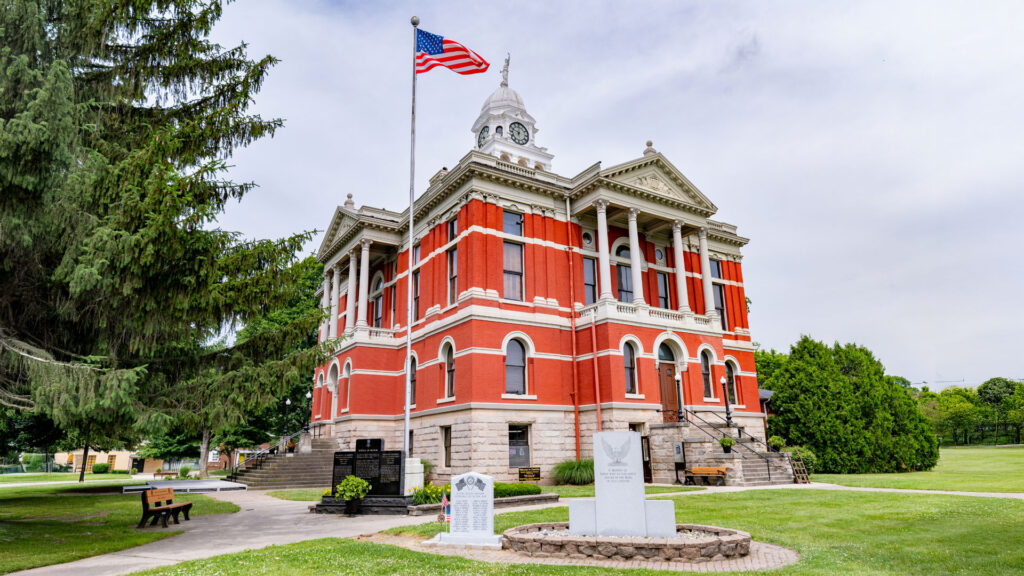
[INSERT BODY IMAGE 2 HERE – 1200×675]
Alt text: Historic courthouse photographed under overcast skies in an active public setting.
Courthouse photography is a clear example of working without control. These buildings are active every day, with staff, visitors, and maintenance crews constantly moving through the space. Expecting empty grounds and perfect light is unrealistic.
Many of the images in my courthouse photography galleries were captured under ordinary, uncontrollable conditions and still perform well. Overcast skies provide even light. Parked cars signal an active civic space. Seasonal elements like snow or fall leaves add context that buyers often want.
Architectural photography for stock and commercial use is about usefulness. An image does not need to be dramatic to be valuable. It needs to be clear, accurate, and well-composed. Real-world conditions are part of that story.
Making Better Decisions in the Field
When conditions are less than ideal, a simple mental checklist can help guide your decision:
- Is the building clearly identifiable?
- Are the main architectural features visible?
- Can framing or angle reduce distractions?
- Does the image provide useful context?
If the answer is yes to most of these, the image is usually worth capturing. Time in the field is limited. Every image you take expands your archive. Every image you skip is a missed opportunity.
Photographing places you cannot control is not a weakness. It is a skill. Accepting imperfect conditions, making fast decisions, and shooting anyway often leads to stronger, more reliable results. Waiting for perfection frequently leads to empty memory cards.
By focusing on clarity, composition, and decision-making rather than ideal conditions, you will come home with more usable images and build a body of work that reflects the real world as it is, not as you wish it to be.