
Vertical stock photography often performs better than horizontal images because it fits modern layouts with less friction. Most photographers shoot horizontally by default. Cameras are designed that way, tripods encourage it, and traditional photography education reinforces wide compositions. For landscapes and architecture especially, horizontal framing often feels natural and intuitive.
But when it comes to stock photography, what feels natural to the photographer does not always align with what buyers actually need.
If you have ever wondered why a simple vertical image sells repeatedly while a dramatic horizontal shot sits untouched, orientation may be part of the answer. This difference is closely tied to buyer behavior, which is explored in more detail in why some photos sell better than others. Vertical photos often outperform horizontal ones not because they are better photographs, but because they fit modern layouts with less effort. In this post, we will look at why vertical images are often more commercially useful, how buyers actually use them, and how you can start shooting with layouts in mind rather than relying on cropping later.
Why Buyers Gravitate Toward Vertical Layouts
Most stock photos today are used digitally first, not in print. Websites, landing pages, email campaigns, and mobile apps all rely on layouts that scroll vertically. Content stacks from top to bottom, and images need to fit into that flow without disrupting the design.
Vertical images naturally align with this structure. They fit cleanly into mobile screens, scale well on desktop, and allow text to be placed above or below without awkward spacing. Designers rarely sit down thinking, “I need a vertical image.” Instead, they look for images that drop into a layout easily. Vertical photos simply create less friction.
Horizontal images can still work, but they often require additional cropping, resizing, or repositioning. That extra effort is usually enough for a buyer to keep scrolling.
Where Vertical Stock Photos Are Actually Used
Designers rarely sit down thinking, ‘I need a vertical image.’ Instead, they look for images that drop into a layout easily. This makes more sense once you understand how stock photo buyers use images.
Understanding where images end up helps explain why orientation matters so much. Vertical stock photos are commonly used in:
- Website hero sections on mobile devices
- Blog post headers and featured images
- Email marketing banners
- Social media stories and vertical ads
- Landing pages with stacked content
- Digital brochures and cover designs
In many of these cases, horizontal images either get cropped aggressively or scaled down to fit, reducing impact. Vertical images maintain their composition and clarity across multiple formats.
From a buyer’s perspective, a vertical image is flexible. It can be cropped wider if needed, but a horizontal image cannot easily gain height without losing important content.
Why Horizontal Photos Often Create Extra Work
Horizontal photos are not inherently bad. The issue is usability.
When a designer places a horizontal image into a vertical layout, several problems can arise:
- Important elements get cropped out
- Text overlaps busy areas of the image
- The image must be resized smaller to fit
- Negative space disappears
All of these require manual adjustments. Stock buyers are often working under deadlines, and they prefer images that solve problems quickly. If one image fits immediately and another requires tweaking, the easier option usually wins.
This is why technically strong horizontal images can underperform in stock libraries. They may be visually appealing, but they demand more effort than a buyer is willing to invest.
Vertical Does Not Mean Tight or Portrait-Style
One of the biggest misconceptions is that vertical images must be tightly framed or portrait-focused. In stock photography, the most useful vertical images are often environmental rather than intimate.
A strong vertical stock photo typically places the subject in the middle third of the frame, leaving space above and below. That space can be sky, pavement, grass, walls, or any clean background that allows for text or design elements.
For example:
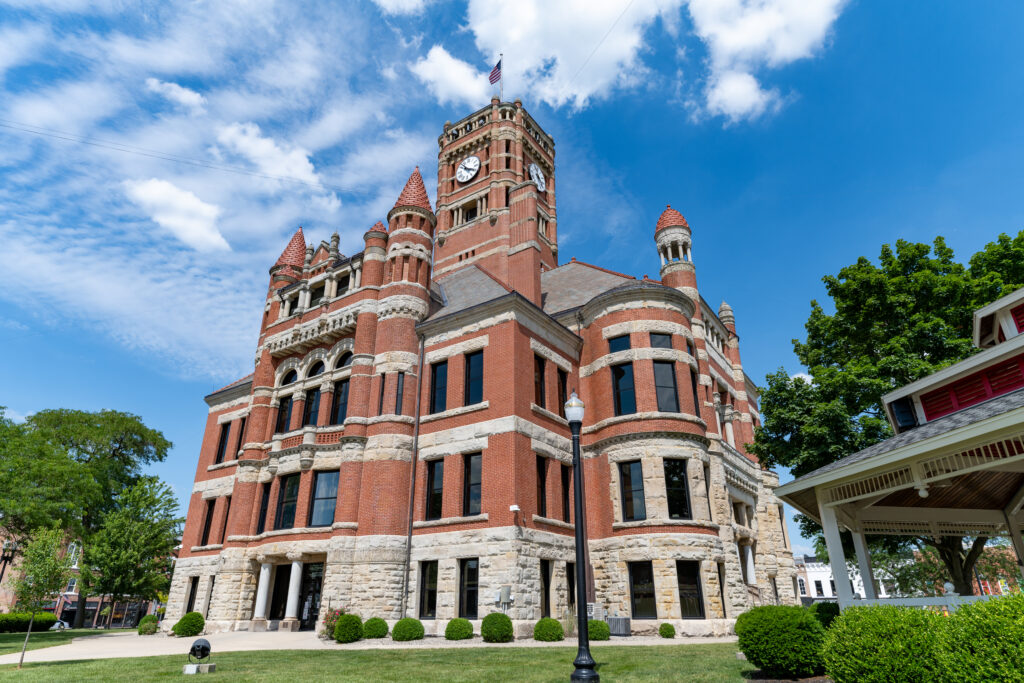
- A courthouse framed vertically with sky above and steps below
- A forest path with space at the top for a headline
- A building facade with clean negative space
These images are not restrictive. They are flexible.
Why Vertical Works Especially Well for Architecture
Architecture is naturally vertical. Buildings rise upward, and vertical framing emphasizes their height and structure. This makes vertical images especially valuable for stock buyers working in government, legal, corporate, and institutional contexts.
Vertical architectural photos often provide:
- Clean lines
- Symmetry
- Predictable negative space
- A professional, neutral tone
A vertical courthouse photo can work as a website header, a report cover, or a brochure image without heavy editing. Horizontal versions may look impressive, but they often struggle to fit those same uses.
Shooting architecture vertically also encourages you to think conceptually. Instead of capturing the entire building in one dramatic frame, you start thinking about how the image will function in real-world designs.
The Role of Negative Space in Vertical Images
Negative space is one of the strongest advantages of vertical stock photos. Vertical framing naturally creates room for text placement without covering the subject.
Buyers frequently add:
- Headlines at the top
- Subtext below
- Buttons or calls to action near the bottom
When an image already accommodates this structure, it becomes immediately useful. Horizontal images often force text to overlap busy areas or require artificial overlays, which many buyers try to avoid.
The goal is not to leave empty space for its own sake. The goal is to leave intentional space that supports design without distracting from the subject.
When Horizontal Still Makes Sense
Vertical images do not replace horizontal ones. They complement them.
Horizontal photos still perform well in:
- Wide landscapes
- Editorial storytelling
- Panoramic scenes
- Full-width desktop banners
Some buyers specifically need wide images, and certain subjects simply work better horizontally. The key is not to abandon horizontal shooting, but to be intentional about when and why you use it.
A balanced portfolio includes both orientations, with each serving a clear purpose.
How to Start Shooting Vertical More Intentionally
The biggest shift happens in the field, not in post-processing.
When you arrive at a scene:
- Ask where the subject would sit in a vertical frame
- Look for clean areas above and below
- Avoid cropping too tightly
- Think about where text might go
Shooting vertically with intention produces better results than cropping later. Cropped verticals often feel constrained, while native vertical compositions feel balanced and deliberate.
Conclusion
Vertical photos tend to outsell horizontal ones in stock photography because they fit modern layouts with less friction. Buyers are not looking for the most impressive image. They are looking for images that integrate smoothly into real-world designs.
By understanding how stock photos are actually used, you can start framing scenes with usability in mind. Shooting more vertical images does not limit creativity. It expands flexibility and increases the chances that your photos solve a buyer’s problem.
As you head into the coming season, experimenting with vertical and conceptual architectural shots is a smart move. Over time, you may find that thinking like a designer in the field changes not only what you shoot, but what sells.