
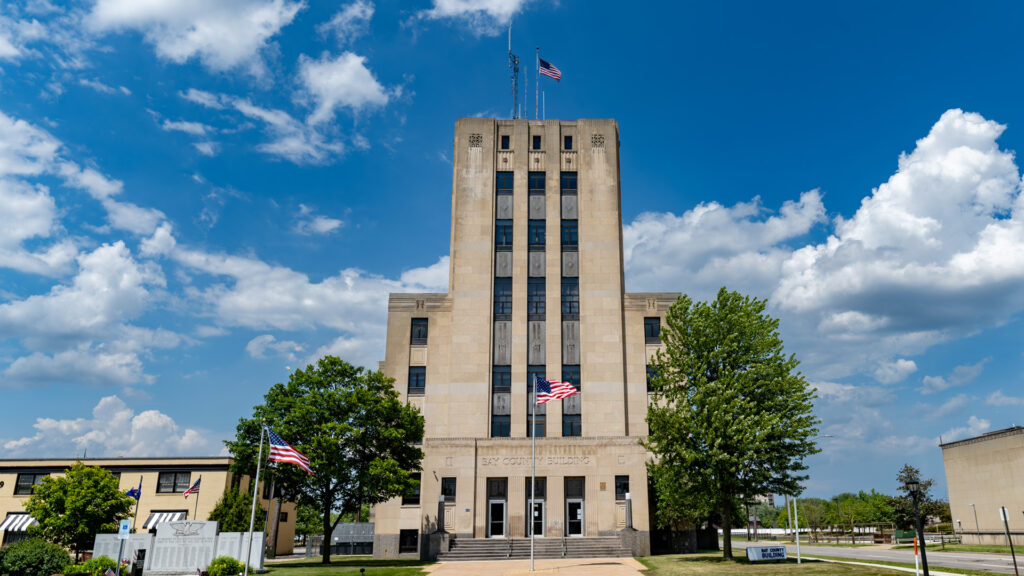
Architecture is naturally vertical. Courthouses, city halls, lighthouses, and historic buildings are designed to rise upward, yet many photographers default to horizontal framing out of habit. While horizontal compositions work well in many situations, vertical architecture photography often creates a stronger visual impact and greater usability in stock libraries.
If you photograph buildings for stock, especially tall government or historic structures, learning how to compose vertically with intention can improve both your images and their commercial appeal. In this article, you will learn what makes vertical architecture photography effective, how to compose it properly, and common mistakes to avoid when shifting from horizontal to portrait orientation.
What Is Vertical Architecture Photography?
Vertical architecture photography refers to composing buildings in portrait orientation rather than landscape orientation. Instead of emphasizing width, the image emphasizes height.
This approach works particularly well for:
- Courthouses with domes or clock towers
- Skyscrapers and modern office buildings
- Churches with steeples
- Lighthouses
- Government buildings with tall columns
Vertical framing reinforces the structure’s natural lines. When done correctly, it makes the building feel taller and more prominent without exaggeration.
Why Vertical Often Feels Stronger
Most buildings are taller than they are wide when viewed from ground level. A horizontal frame often introduces unnecessary space on either side of the structure. Vertical orientation removes that excess and keeps attention focused on the architecture itself.
In stock photography, this also increases layout flexibility. Designers frequently look for portrait-oriented images to fit mobile layouts, side banners, and blog graphics.
If you are exploring the broader orientation strategy for stock, you may want to read Why Vertical Photos Outsell Horizontal Ones in Stock Photography to understand the performance side of the discussion.
How to Compose Vertical Architecture Photography
Simply rotating your camera is not enough. Vertical composition requires deliberate adjustments.
1. Control Perspective and Vertical Lines
Tall buildings create perspective distortion when shot from close range. The top appears to lean inward.
To reduce distortion:
- Step farther back when possible
- Use a slightly longer focal length
- Keep the camera level
- Correct minor distortion in post-processing
If you want to see how vertical framing works across multiple courthouse and civic structures, explore the Architecture Photography collection for real examples.
Strong vertical architecture photography depends on clean, straight lines.
2. Use the Sky Intentionally
Vertical framing naturally includes more sky. That can either strengthen or weaken your image.
Ask yourself:
- Is the sky clean or distracting?
- Does it provide usable copy space?
- Does it balance the weight of the building?
A plain blue or lightly textured sky often enhances vertical composition. It also increases commercial usability for stock buyers who may want to overlay text.
3. Balance the Foreground
When switching to portrait orientation, foreground space becomes more noticeable. Too much empty sidewalk or lawn at the bottom can feel unbalanced.
Adjust by:
- Moving closer
- Raising your framing slightly
- Including subtle leading lines
Vertical architecture photography should feel grounded, not bottom-heavy.
4. Emphasize Height With Leading Lines
Columns, staircases, and symmetrical façades are ideal for portrait framing.
Position yourself so that:
- Vertical lines run parallel to the edges of your frame
- The viewer’s eye moves upward naturally
- Symmetry is centered and intentional
Courthouses are especially well-suited for this technique because of their strong geometric structure.
When Vertical Works Best for Stock
Vertical architecture photography is particularly effective when:
- The building’s defining feature is tall
- The composition benefits from clean sky above
- The image may be used in mobile layouts
- Designers need space for headlines
For stock contributors, this is a practical expansion strategy. Instead of replacing horizontal images, you are adding another usable format.
If you are building your courthouse portfolio, consider capturing:
- One horizontal hero shot
- One full-building vertical
- One vertical detail shot
This approach ensures you leave every location with multiple layout options.
Common Mistakes in Vertical Architecture Photography
Cropping Instead of Re-Composing
Cropping a horizontal image into vertical often feels forced. The building may not be centered properly, and important foreground elements may be lost.
Whenever possible, compose vertical images intentionally in-camera.
Shooting Too Close
Standing too close exaggerates distortion in portrait orientation. This creates leaning walls and unnatural perspective.
Step back when possible and use focal length to compress slightly.
Ignoring Light Direction
Side lighting can create uneven exposure from bottom to top in tall compositions. Watch how shadows move across columns and upper architectural details.
If you need a refresher on controlling exposure in challenging light, review the exposure triangle explained for better balance.
Forgetting Commercial Usability
Vertical architecture photography for stock should be clean. Avoid:
- Distracting signage
- People in frame
- Temporary objects
- Construction clutter
Clean compositions perform better in commercial stock libraries.
Vertical architecture photography is not just a rotated horizontal image. It is a compositional decision that emphasizes height, strengthens structure, and expands stock usability. For courthouse and government building photographers, portrait orientation often aligns naturally with the subject’s design.
As you continue building your architecture portfolio, begin treating vertical as an intentional format rather than an afterthought. Rotate your camera, adjust your framing, and compose with balance in mind. Over time, vertical architecture photography will become a standard part of your workflow, giving buyers more flexibility and giving your portfolio greater depth.